
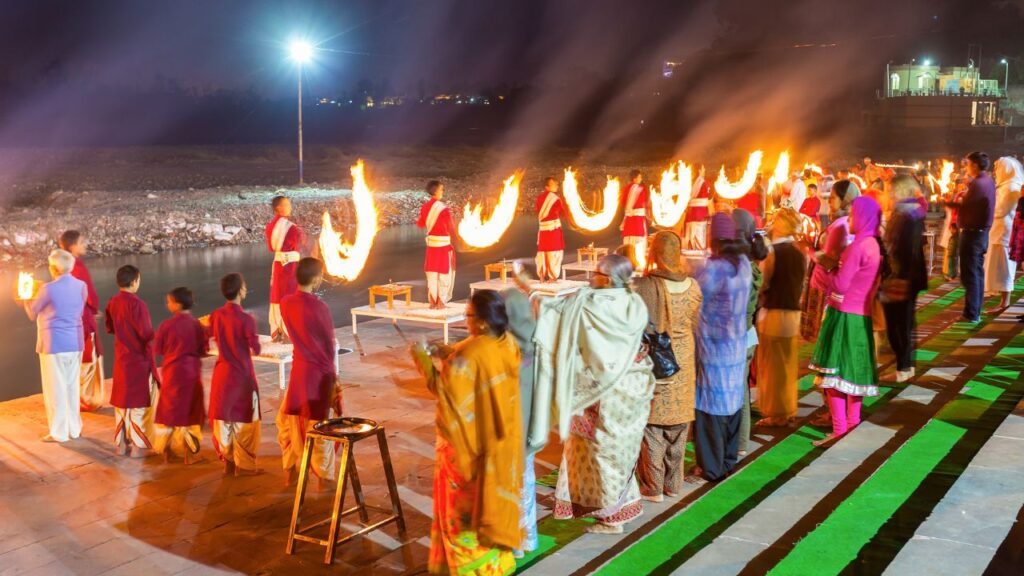
India is the origin country of yoga, Ayurveda, and Vipassana meditation — the three traditions that underpin the majority of wellness retreat programming globally. Practising these disciplines in India is not simply a matter of geography: it provides access to teachers who carry lineage transmission from master to student across multiple generations, to therapeutic systems practised continuously for 3,000–5,000 years in their original cultural context, and to an immersive environment where the tradition is not imported or adapted but lived as part of the daily fabric of society. India hosts an estimated 10,000+ registered ashrams, the world’s highest density of Yoga Alliance-certified teachers relative to population, and over 200 certified Ayurvedic hospitals in Kerala state alone. À La Carte Travel Concierge plans verified, logistically comprehensive India retreat journeys for international travellers — handling every complexity of India travel so that you arrive prepared and experience the country safely and fully.
What Are the Main India Retreat Destinations?
India’s retreat landscape spans the subcontinent, but three regions represent the primary destinations for international wellness retreat travellers: Rishikesh (yoga and meditation), Kerala (classical Ayurveda), and Mysore (Ashtanga yoga). Each has a distinct speciality rooted in its specific cultural and geographical context.
| Destination | State | Primary Speciality | Why Go Here | Cost Range (7 days, all-inclusive) |
|---|---|---|---|---|
| Rishikesh | Uttarakhand | Hatha yoga; Ashtanga; meditation; pranayama; Vedic philosophy | Home of the modern global yoga movement; Himalayan foothills setting; 200+ registered yoga schools; daily Ganga Aarti ceremonies on the Ganges | $400–$1,400 |
| Kerala | Kerala | Classical Panchakarma Ayurveda; Kerala Kalaripayattu; Kathakali | Highest density of government-certified Ayurvedic hospitals in the world; physician-supervised Panchakarma available at clinical standard; backwater houseboat culture | $1,200–$5,000 |
| Mysore | Karnataka | Ashtanga yoga (Mysore style); Iyengar yoga | City where K. Pattabhi Jois taught Ashtanga at the KPJAYI; birthplace of the Mysore practice method; most rigorous traditional Ashtanga instruction available globally | $600–$1,800 |
| Dharamshala / McLeod Ganj | Himachal Pradesh | Tibetan Buddhist meditation; Vipassana; Tibetan medicine | Seat of the Tibetan government-in-exile; Dalai Lama’s residence; access to authentic Tibetan Buddhist teaching lineages and Vipassana centres | $300–$1,000 |
| Auroville / Pondicherry | Tamil Nadu | Integral yoga (Sri Aurobindo tradition); conscious community | Unique intentional community of 3,000+ residents from 60 countries; Sri Aurobindo Ashram; meditation in the Matrimandir (gold dome meditation centre) | $500–$1,500 |
What Is an Ashram Stay and What Should You Expect?
An ashram is a residential spiritual community structured around a daily schedule of yoga, meditation, philosophical study, and karma yoga (selfless service), living under the guidance of a teacher or within a defined spiritual lineage. An ashram stay is not a hotel stay with yoga classes: it is an immersive community experience with a demanding daily schedule, strict behavioural codes, communal meals, vegetarian diet, minimal digital access, and an expectation of sincere engagement with the practice. The rewards of this structure — access to genuine lineage teaching, the community of fellow practitioners, and the cumulative depth that a fully immersive environment produces — are commensurate with the level of commitment required.
The standard expectations at a traditional Indian ashram are listed below.
- Daily schedule: Begins at 5:00–5:30 AM with morning prayers or mantra. Includes 2 daily yoga sessions, philosophy lectures, karma yoga duties, evening satsang, and lights out by 10:00 PM.
- Diet: Strictly vegetarian (sattvic); no meat, fish, eggs, alcohol, or caffeine. Many ashrams are vegan. Meals are communal and served at fixed times.
- Dress code: Conservative clothing covering shoulders and knees at all times on ashram premises. White or muted colours preferred at most institutions.
- Digital access: Mobile phones are restricted or prohibited during practice hours. Many ashrams restrict devices entirely during the stay.
- Gender norms: Traditional ashrams maintain gender-separated accommodation and, in some cases, practice spaces. Physical contact between unacquainted men and women is not appropriate in ashram environments.
What Is Panchakarma and Where Is It Best Practised in India?
Panchakarma is the classical Ayurvedic 5-action purification protocol — comprising vamana, virechana, basti, nasya, and raktamokshana — administered over 14–28 days under the supervision of a qualified Ayurvedic physician (vaidya). It is the deepest and most medically significant therapeutic protocol in the Ayurvedic tradition, requiring daily treatments, strict dietary management, and physician monitoring throughout. Kerala is the only region of India — and the world — where authentic Panchakarma is practised at clinical medical standard, with government-certified Ayurvedic hospitals (the highest certification tier in the Indian regulatory system), fourth-generation vaidyas, and Kerala’s unique humid climate that enhances the therapeutic efficacy of oil treatments through elevated skin absorption. A 14-day supervised Panchakarma programme in Kerala costs between $1,200 and $4,000 per person at a certified hospital, inclusive of accommodation, all treatments, physician consultations, and meals.
Rishikesh: The World Capital of Yoga
Rishikesh, situated at the foothills of the Himalayas in Uttarakhand state at an elevation of 372m, is designated the “Yoga Capital of the World” and has carried that designation with credible cultural backing since the modern yoga movement’s international transmission began there in the 1960s. The confluence of the Ganges River and the Himalayan gateway creates a setting of rare natural and spiritual power. Key facts for the international retreat traveller are listed below.
- Nearest airport: Jolly Grant Airport, Dehradun (DED) — 35 km from Rishikesh; 45-minute drive. International connections via Delhi Indira Gandhi International Airport (DEL) — 250 km; 5–6 hours by road or 1-hour domestic flight to Dehradun.
- Best season: October–November and February–May offer the best weather (15–30°C). June–September is monsoon season — heavy rainfall, some programme disruptions, lowest prices. December–January is cold (5–15°C at night) but culturally active.
- Major institutions: Parmarth Niketan (one of India’s largest ashrams; famous for Ganga Aarti ceremony); Sivananda Ashram; Rishikesh Yog Peeth (RYP — internationally recognised YTT institution); Yoga Vidya Mandiram.
- Programme cost: Rishikesh is the most affordable high-quality yoga destination globally. A 7-day all-inclusive programme costs $400–$900 USD at reputable schools; a 200-hour YTT costs $900–$1,800 USD over 26 days.
“To practise yoga in Rishikesh is to practise at the source — not metaphorically but literally, in the city where the global transmission of the tradition began, on the banks of the river that has witnessed that transmission for 3,000 years.”
— Ana, Co-Founder, À La Carte Travel Concierge
Plan Your India Retreat Journey With À La Carte Travel Concierge
India travel requires a level of destination-specific expertise that general travel agencies and online booking platforms cannot provide. The complexity of India — the bureaucratic visa process, the range of accommodation and hygiene standards, the transport infrastructure, the cultural protocols, and the sheer volume of options at wildly varying quality levels — demands a travel partner with direct knowledge and verified local connections. À La Carte Travel Concierge brings both.
What the India Retreat Planning Service Includes
Every India retreat journey planned by À La Carte includes: e-Visa application guidance (mandatory for most nationalities; applied online minimum 4 business days before travel); health preparation protocol (vaccination recommendations; malaria risk assessment by region; traveller’s health kit); programme vetting and teacher credential verification; accommodation safety assessment; domestic transport logistics (inter-city and airport transfers); cultural orientation briefing; and 24-hour support contact throughout your journey.
Start Planning Your India Retreat
Contact the team here or schedule a free 30-minute consultation to begin planning your India retreat journey. Explore Asia Inspiration Journeys for ideas on combining an India retreat with broader subcontinent travel.