
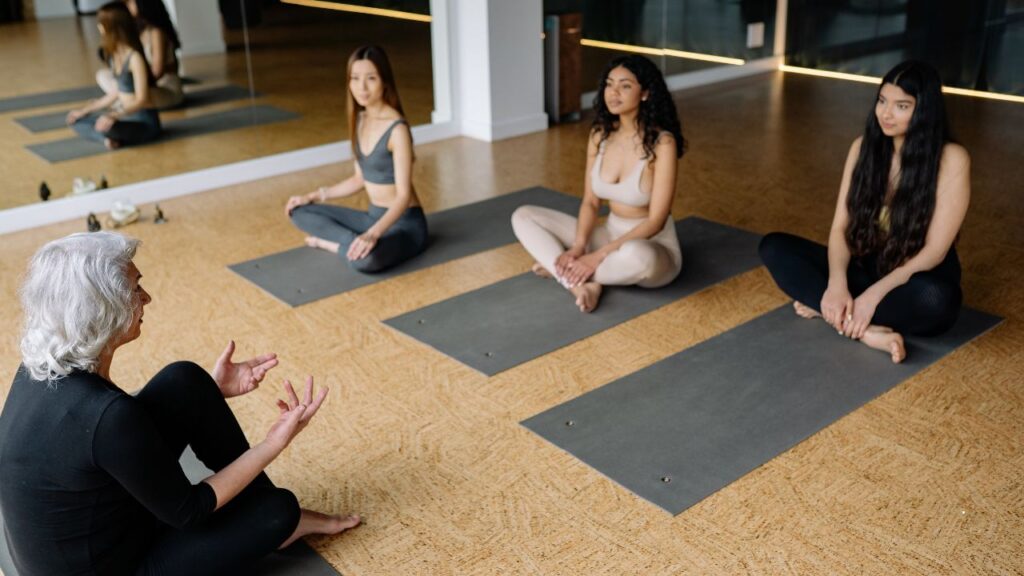
Vipassana and Transcendental Meditation (TM) are the two most widely researched meditation techniques in the world, with a combined total of more than 1,200 peer-reviewed studies between them as of 2024. Vipassana is a 2,500-year-old Theravada Buddhist insight meditation technique based on direct observation of sensory experience, practised in total silence over intensive 10-day residential courses. Transcendental Meditation is a mantra-based technique formalised by Maharishi Mahesh Yogi in 1955, practised for 20 minutes twice daily in a comfortable seated position without requiring silence or withdrawal from daily life. The two techniques differ fundamentally in their mechanism, learning pathway, cost, and neurological signature—and the right choice depends entirely on your objective, lifestyle, and prior experience.
What Is Vipassana Meditation?
Vipassana is a meditation technique meaning “insight” or “clear seeing” in Pali, rooted in the earliest Buddhist teachings attributed to Siddhartha Gautama circa 500 BCE and preserved through the Theravada tradition of Myanmar. The technique as practised globally today was standardised and transmitted by S.N. Goenka (1924–2013), who established the Vipassana Research Institute in Igatpuri, India in 1976 and grew the teaching network to more than 340 Vipassana centres worldwide by 2024. The practice involves systematic, non-judgmental observation of bodily sensations from the crown of the head to the soles of the feet (body scanning), producing direct experiential insight into the three characteristics of existence: impermanence (anicca), suffering (dukkha), and non-self (anatta).
What Is Transcendental Meditation (TM)?
Transcendental Meditation (TM) is a silent mantra-based technique in which the practitioner effortlessly repeats a personalised, meaningless sound (mantra) for 20 minutes, twice daily, in order to allow the mind to settle into a state of “restful alertness”—a physiologically distinct fourth state of consciousness characterised by coherent alpha brainwave activity and significantly reduced metabolic rate. TM was formalised by Maharishi Mahesh Yogi in India in 1955, introduced to the West following his 1958 world tour, and today is taught by more than 40,000 certified TM teachers in over 100 countries. TM instruction requires a standardised 4-session course with a certified teacher and the payment of a course fee, which ranges from $380 (students) to $960 (employed adults) in the United States as of 2024.
How Do Vipassana and TM Differ in Practice?
| Dimension | Vipassana | Transcendental Meditation (TM) |
|---|---|---|
| Technique type | Focused attention + open monitoring (body scan) | Automatic self-transcending (mantra) |
| Learning format | 10-day residential silent retreat (mandatory) | 4-session course with certified teacher |
| Daily practice duration | 2 hours/day (retreat); 1–2 hours/day (home) | 20 minutes, twice daily |
| Cost | Free (dana/donation system) | $380–$960 (course fee) |
| Silence required | Yes – Noble Silence for full 10 days | No – practised anywhere, eyes closed |
| Philosophical basis | Theravada Buddhism; non-sectarian in delivery | Vedic tradition; secular in delivery |
| Primary brainwave signature | Increased theta and gamma coherence | Frontal alpha coherence (unique to TM) |
| Contraindications | Active psychiatric disorders; trauma history (requires screening) | None documented; suitable for most individuals |
What Does the Research Show for Each Technique?
The research evidence for both techniques is substantial, but the study designs and outcome measures differ, making direct comparison complex. Vipassana research has focused primarily on psychiatric populations and intensive retreat settings, while TM research—supported largely by the Maharishi Foundation—has focused on cardiovascular outcomes, academic performance, and workplace stress in everyday practitioners.
The key clinical findings for each technique are listed below.
- Vipassana – mental health outcomes: A 10-day Vipassana retreat produced a 44% reduction in depression scores, a 39% reduction in anxiety, and a 43% reduction in substance cravings in prison populations (Bowen et al., 2006, Substance Abuse). Effects were sustained at 3-month follow-up.
- Vipassana – neuroscience: Long-term Vipassana practitioners (10,000+ lifetime hours) show significantly increased cortical thickness in the insula and prefrontal cortex, and reduced age-related cortical thinning—equivalent to 7.5 fewer years of brain aging (Lazar et al., 2005).
- TM – cardiovascular outcomes: The American Heart Association granted TM a Class IIB recommendation for hypertension management in 2013 based on a meta-analysis showing an average systolic blood pressure reduction of 4.7 mmHg among regular practitioners.
- TM – PTSD outcomes: A 2018 RCT with US veterans found that TM practice reduced PTSD symptom severity by 48% over 3 months compared to a 28% reduction in the waitlist control group (Lancet Psychiatry, 2018).
- TM – brainwave signature: TM uniquely produces synchronised frontal alpha1 coherence across both hemispheres—a brainwave state not replicated by any other meditation technique in controlled EEG studies (Travis & Shear, 2010).
What Are the Other Major Meditation Techniques?
Beyond Vipassana and TM, the major meditation techniques practised globally include Zen (Zazen), Loving-Kindness Meditation (Metta), Yoga Nidra, Kundalini Meditation, and Mindfulness-Based Cognitive Therapy (MBCT). Each technique occupies a distinct position in the taxonomy of meditation styles established by Travis and Shear’s 2010 framework in Consciousness and Cognition.
| Technique | Type | Method | Primary Evidence Base |
|---|---|---|---|
| Vipassana (Insight) | Open monitoring | Body scan; bare attention | Depression, addiction, trauma (700+ studies) |
| Transcendental Meditation | Automatic self-transcending | Silent mantra repetition | Cardiovascular, PTSD, performance (500+ studies) |
| Zen / Zazen | Focused attention + open monitoring | Seated posture awareness; koan inquiry | Cognitive flexibility; emotional regulation |
| Loving-Kindness (Metta) | Focused attention | Directed compassion phrases | Social connection; reduced self-criticism; chronic pain |
| Yoga Nidra | Automatic self-transcending | Guided body awareness; hypnagogic state | PTSD; insomnia; chronic pain |
| MBCT | Open monitoring | Mindfulness + cognitive restructuring | Depression relapse prevention (44% reduction vs. antidepressants) |
Which Meditation Technique Is Right for You?
The right meditation technique depends on three factors: your primary goal, your prior experience level, and the intensity of engagement you are ready for. Vipassana is optimal for individuals seeking deep psychological insight, trauma processing, and sustained long-term practice—but the 10-day silent format represents a significant initial commitment. TM is optimal for high-stress individuals seeking an accessible, evidence-based daily practice with minimal time investment and no requirement for silence or lifestyle change.
The decision matrix below simplifies the selection process.
- Choose Vipassana if: You are ready for a 10-day silent commitment, you seek deep insight into habitual patterns, your primary goal is psychological transformation rather than stress management, and you have no active psychiatric contraindications.
- Choose TM if: You want a twice-daily effortless practice that integrates into a busy professional life, your primary goals are stress reduction and cardiovascular health, and you prefer a personalised mantra assigned by a certified teacher.
- Choose Loving-Kindness (Metta) if: Your primary challenge is self-criticism, loneliness, chronic pain, or damaged social relationships.
- Choose Yoga Nidra if: Your primary concern is insomnia, PTSD, or chronic pain, and you require a completely effortless, lying-down practice.
“The best meditation technique is the one you will actually practise consistently. Method matters far less than regularity.”
— Dr. Daniel Goleman & Dr. Richard Davidson, Altered Traits: Science Reveals How Meditation Changes Your Mind, Brain, and Body (2017)
Find Your Meditation Practice Through Intentional Travel
Choosing a technique is the first step. Establishing a sustainable practice requires an environment designed for depth — away from the competing stimuli that fragment daily attention. À La Carte Travel Concierge designs intentional travel experiences that create that environment.
The Retreat Series: Women to Women Retreat
The Women to Women Retreat — the first programme in The Retreat Series — incorporates guided morning meditation sessions suitable for practitioners at all levels, including beginners. Held at Sage Hill Inn & Spa in Kyle, Texas (August 27–30, 2026) and led by women’s health specialist Rachel Spears, the programme pairs daily meditation with nervous system coaching, nature immersion, and a 30-minute massage in a group limited to 10 women. Total cost: $2,250 per person.
Take the Next Step
View the full retreat programme and reserve your place, or contact the team to discuss how intentional travel can support your meditation journey.