
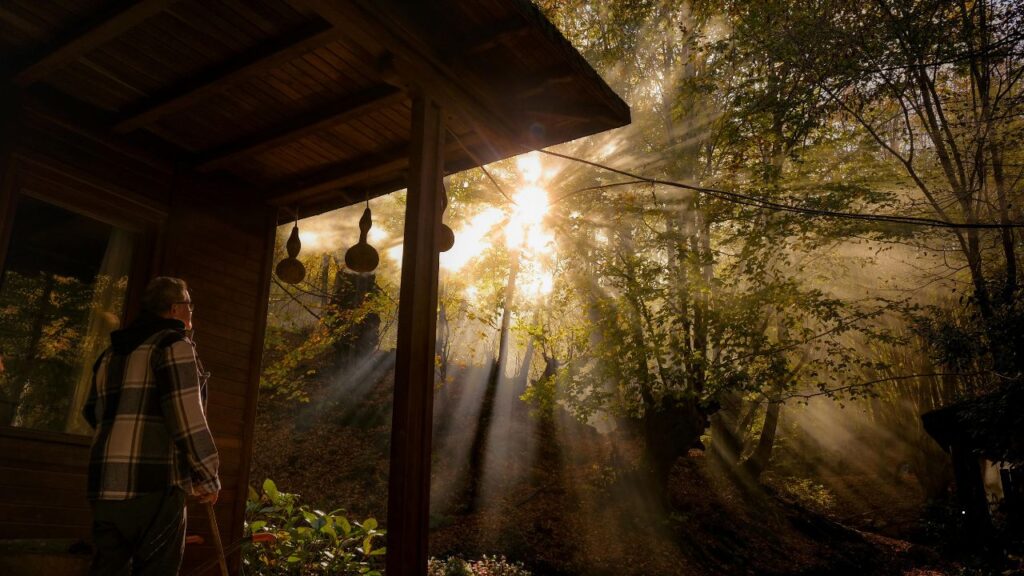
A silent meditation retreat is a residential programme — ranging from 3 to 30 days — in which participants maintain Noble Silence (abstaining from speech, eye contact, reading, and digital communication) while practising intensive meditation for 8–12 hours per day under the guidance of experienced teachers. The neurological evidence for the superiority of intensive residential practice over home-based meditation is unambiguous: a 7-day silent retreat produces measurable increases in grey matter density in the prefrontal cortex and reductions in amygdala reactivity equivalent to 6–12 months of daily home practice, as documented in a 2018 fMRI study at the Contemplative Sciences Center, University of Virginia. À La Carte Travel Concierge plans and books personalised silent meditation retreat journeys in Bali, India, Portugal, Costa Rica, and across the United States, matched to your experience level, preferred tradition, and travel requirements.
What Happens to the Brain and Body During a Silent Retreat?
The biological changes during a silent retreat unfold in a predictable sequence across four phases, each corresponding to a distinct neurological mechanism activated by the removal of verbal communication, digital stimulation, and social performance demands.
| Day Range | Phase | Primary Change | Subjective Experience |
|---|---|---|---|
| Days 1–2 | Withdrawal and decompression | Dopamine normalisation; attentional residue clearance | Restlessness, mental busyness, difficulty settling |
| Days 3–4 | Deepening | Default Mode Network (DMN) activity begins decreasing; parasympathetic tone increases | Periods of stillness; emotional material surfacing; reduced agitation |
| Days 5–6 | Integration | Cortisol measurably reduced; prefrontal cortex activation stabilises; amygdala reactivity decreases | Clarity, emotional regulation, heightened sensory perception |
| Day 7+ | Consolidation | Structural grey matter changes begin; theta brainwave coherence established in sits | Spaciousness, equanimity, reduced reactivity to thoughts and sensations |
What Are the Different Types of Silent Meditation Retreat?
The major types of silent meditation retreat are differentiated by their meditation tradition, teaching structure, and degree of silence imposed. The four most widely attended silent retreat formats internationally are Vipassana (S.N. Goenka tradition), Zen sesshin, Tibetan Buddhist retreat, and secular mindfulness retreat.
The four main silent retreat types and their defining characteristics are listed below.
- Vipassana (Goenka tradition): 10-day programme in strict Noble Silence with 10 hours of daily sitting meditation. Free of charge (dana system). Available at 340+ centres worldwide, including the Dhamma Patapa centre in Georgia, USA, and Dhamma Sobhana in Massachusetts. No prior meditation experience required; no philosophical or religious commitment. The most accessible and widely attended silent retreat format globally.
- Zen sesshin: 5–7 day intensive retreat in the Soto or Rinzai Zen tradition, featuring zazen (seated meditation), kinhin (walking meditation), work practice (samu), and individual interviews with the teacher (dokusan or sanzen). Conducted in strict silence with a regimented schedule beginning at 4:30 AM. Requires basic meditation familiarity.
- Tibetan Buddhist retreat: Varies from 3-day weekend to 3-month solitary retreat. May involve specific practices — Vipassana, Shamatha, Tonglen, or deity visualisation (sadhana) — within the Theravada, Kagyu, Gelug, or Nyingma lineages. Teacher interviews and guided practice instruction are standard components.
- Secular mindfulness (MBSR-based) silent retreat: 5–8 day programme based on Jon Kabat-Zinn’s Mindfulness-Based Stress Reduction curriculum. No religious framework; suitable for participants who want the neurological benefits of intensive practice without Buddhist or Hindu philosophical content. Growing availability across the United States, UK, and Western Europe.
What Is Noble Silence and How Is It Maintained?
Noble Silence is the practice of refraining from all forms of communication — verbal speech, gestures, eye contact, written notes, and digital messaging — during the retreat period. Noble Silence removes the social performance demands (monitoring others’ reactions, managing impressions, processing interpersonal dynamics) that consume significant cognitive resources in ordinary life, freeing that capacity for internal observation. Mealtimes, walking periods, and rest periods are all conducted in silence. Communication with teachers is typically permitted during designated interview periods (10–20 minutes per participant per day at most centres). Noble Silence begins formally after the opening session on Day 1 and ends in a designated closing period, typically on the morning of the final day.
Is a Silent Retreat Suitable for Beginners?
The 10-day Vipassana (Goenka tradition) retreat is specifically designed for beginners and requires no prior meditation experience. Approximately 60–70% of first-time Vipassana participants have no previous formal meditation practice (Vipassana Research Institute, 2022). The progressive instruction structure — introducing basic breath awareness on Day 1 before advancing to body scanning technique on Day 4 — is designed to be accessible to participants at all levels. However, beginners should be aware that the first 3 days are psychologically challenging for most participants, regardless of prior experience. Preparation through daily 20-minute meditation practice for 4–6 weeks before the retreat significantly improves the experience.
What Should You Bring to a Silent Meditation Retreat?
The packing requirements for a silent meditation retreat are deliberately minimal. Most centres provide meditation cushions, blankets, and mats. The items most useful to bring are listed below.
- Comfortable, modest clothing: Loose-fitting, non-distracting layers in muted colours. Most centres request that participants avoid tight or revealing clothing. 5–7 changes for a 7–10 day retreat.
- Personal meditation shawl: A lightweight shawl (wool or cashmere) for seated practice in air-conditioned or cool-weather hall environments.
- Journal (for post-session notes): Many centres permit journalling during non-sitting periods; confirm the individual centre’s policy before packing.
- Prescription medications: In original labelled containers with a physician’s letter. Disclose all medications during the pre-retreat health screening.
- No books, devices, or entertainment: Reading, listening to music, and device use are prohibited at virtually all silent retreat centres. Leave them at home.
What Are the Best Destinations for a Silent Meditation Retreat?
The best silent retreat destinations combine a strong local meditation tradition, experienced resident teachers, natural environments with low ambient noise, and accessible retreat infrastructure for international travellers.
| Destination | Primary Tradition | Programme Length | Cost Range |
|---|---|---|---|
| Bali, Indonesia (Ubud) | Vipassana; Zen; secular mindfulness | 5–14 days | $800–$3,500 |
| Rishikesh, India | Vedic; Yoga Nidra; Vipassana | 7–30 days | $400–$2,500 |
| Portugal (Alentejo) | Secular mindfulness; Vipassana; Zen | 5–10 days | $900–$3,000 |
| Costa Rica | Secular mindfulness; Vipassana | 5–10 days | $1,200–$3,500 |
| United States (various) | Insight Meditation (IMS, Spirit Rock); Zen; MBSR | 3–30 days | $400–$3,000 (dana-based options available) |
“In the depth of silence, the noise of the conditioned mind becomes audible for the first time — and with that clarity comes the possibility of genuine change.”
— Tara Brach, Radical Acceptance (2003)
Plan Your Silent Retreat Journey With À La Carte Travel Concierge
À La Carte Travel Concierge plans and books personalised silent meditation retreat journeys matched to your tradition preference, experience level, destination, and travel requirements. Ana and Stephanie identify programmes led by teachers with verifiable lineage credentials, review the physical environment and facility quality, and handle all logistics — flights, transfers, pre-retreat health preparation, and packing guidance — so you arrive ready to practise.
Book Your Free Silent Retreat Consultation
A silent retreat is the highest-return investment available in personal development — and choosing the right programme for your experience level and objectives determines the outcome. Contact the team here or schedule a free 30-minute consultation to begin planning a silent retreat journey designed precisely around you.